
Standards · Sewage sludge recovery
Every sewage plant faces the same changeover by 2029.
Almost every operator is working out the answer alone.
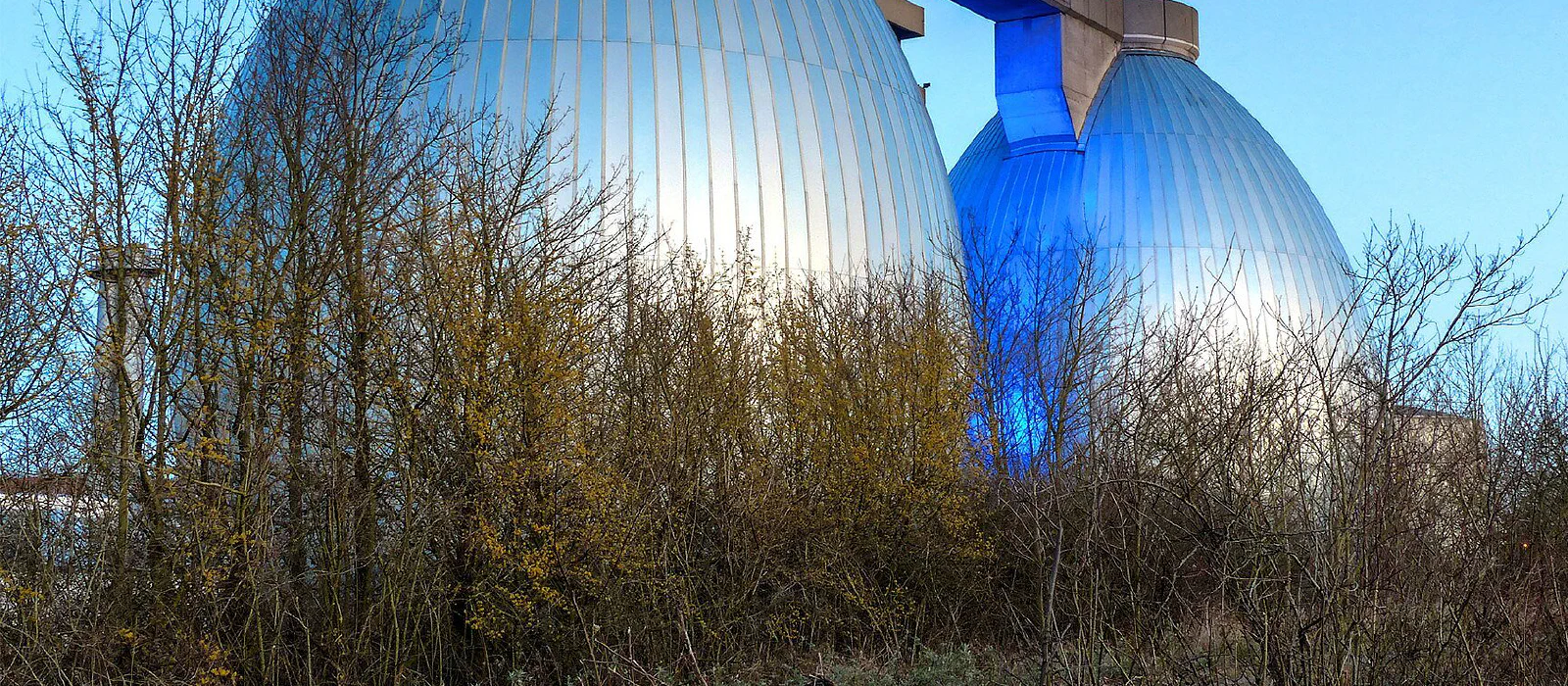
around 60 Plants a year in Germany
Operators who must convert their sewage plant describe together what a recovery plant has to deliver. Requirements, tender documents and financing are then ready to go. And because a plant only pays off at regional volume, it is affordable only together.
Behind this project is .GUT. We bring municipalities and solution providers together, so that what holds every municipality up on its own gets solved. More about our system here.
- Pooling demand
- 2 Standards workshop
- 3 Publication
- 4 Framework agreement
- 5 Delivery
We are pooling demand.
As soon as enough municipalities and solution providers register interest, we schedule the standards workshop.
What the standards workshop works on.
Four topics that operators and solution providers work on in the standards workshop.
- 1Choice of process Wet or ash process, Tetraphos, AshDec, Pearl.
- 2Regional volume pooling What volume makes a plant viable, which catchment area.
- 3Transport and logistics Dewatering, drying, routes between plant and facility.
- 4Procurement and financing Inter-municipal company, PPP, recovery through charges.
Who is at the table.
- Municipalities Towns, special purpose associations and water boards operating a sewage plant.
- Solution providers Companies for plant construction, recovery processes, mono-incineration and operation.
- Experts Waste and fertiliser law, charge calculation, inter-municipal contracts.
Still wanted: Municipalities, solution providers and experts for all four topics.
What comes out of it.
- Solution-neutral All services described in modules, no products prescribed.
- Tender-ready Legally reviewed, through to call-off.
- Financeable Grants planned in, private capital where it fits.
- Fully planned Every step prepared through to handover.
- Measurable Metrics from day one.
Frequently asked questions.
Do I commit to anything if my municipality joins?
What does it cost, and who pays .GUT?
Solution providers sit at the table in the workshop. Is that a problem for procurement?
Who is the contracting authority for the joint framework agreement?
Does our solution have to match the standard exactly?
Prefer to talk? 20 minutes, online.
Book a callHow to join.
Your municipality is planning this too?
- 1Tell us what you are planning Two minutes online. No documents, no obligation.
- 2Come to the standards workshop With municipalities planning the same. Free to attend, a few sessions.
- 3Procure under the standard From the joint framework agreement, without a procedure of your own. Whether at all is your municipality's decision.
Your solution fits this project?
- 1Tell us what you deliver Two minutes online. No contract, no costs.
- 2Positioning Once the workshop is in sight, we place your solution in a conversation: demand, topics, readiness. Then you know your seat and the terms.
- 3Standards workshop and framework agreement With the municipalities you define what the solution must do. Then you bid once and deliver to many.
Who is behind .GUT.
 Marc Bernath
Founder, .GUT Future Cities
Marc Bernath
Founder, .GUT Future Cities.GUT is a privately run initiative based in Berlin. We bring together municipalities that plan the same and, with them and with solution providers, develop shared standards and joint procurement.
.GUT is financed from the savings that standardisation and pooled orders bring on both sides. Participation is free for municipalities. Solution providers pay for the workshop and a share of the orders that result from it. How the system works